Whales are among the largest and most remarkable animals on Earth. These marine mammals live in oceans around the world, from warm tropical waters to the cold seas surrounding the poles.
Life Beneath the Surface
Although whales spend their lives in water, they breathe air through blowholes located on top of their heads. They must regularly return to the surface to breathe before diving again in search of food or traveling through the ocean.
Whales are warm-blooded, give birth to live young, and nurse their calves with milk. A thick layer of fat called blubber helps protect them from cold water and stores energy during long migrations.
Two Main Groups
Whales are generally divided into baleen whales and toothed whales. Baleen whales filter small animals from the water using flexible plates inside their mouths. This group includes blue whales, humpback whales, and gray whales.
Toothed whales use teeth to catch fish, squid, and other prey. Many of them also use echolocation, producing sounds and listening for returning echoes to understand their surroundings. Sperm whales, belugas, and orcas belong to this group.
The Blue Whale
The blue whale is the largest known animal to have ever lived. An adult can grow longer than a city bus and weigh well over one hundred tonnes. Despite its enormous size, it feeds mainly on tiny crustaceans called krill.
Communication and Migration
Whales communicate using clicks, whistles, pulses, and complex songs. Some sounds can travel across great distances underwater. Humpback whales are especially famous for their long, patterned songs.
Many species migrate thousands of kilometres each year. They often feed in cold, nutrient-rich waters before traveling to warmer regions where they mate and give birth.
Protecting Whales
Commercial hunting once caused severe declines in many whale populations. Today, whales also face threats from fishing gear, ship collisions, underwater noise, pollution, and changes to ocean ecosystems.
Conservation programs, safer fishing practices, protected habitats, and international cooperation can help whale populations recover. Protecting whales also supports healthier oceans because these animals play an important role in marine food webs and nutrient cycles.
At SlotsVader Casino, we sincerely think that every spin can result in genuine excitement. With an broad selection of slot games, there’s a game for everyone. The mesmerizing graphics and cutting-edge gameplay pull us into unique adventures. Plus, the enticing bonuses elevate our experience to a greater extent. Curious how the intuitive interface makes it all happen smoothly? Let’s look at the main features that make SlotsVader a top option in the gaming world.
Key Takeaways
SlotsVader Casino features a diverse selection of slot games, from timeless fruit machines to advanced video slots, providing excitement for every player.
The casino boasts fascinating themes and compelling narratives that convert each spin into a thrilling adventure.
Players enjoy attractive bonuses and promotions, including substantial welcome bonuses and free spins, creating a rewarding gaming experience.
An user-friendly user interface enables simple navigation between multiple games, boosting the overall gaming experience for users.
SlotsVader Casino prioritizes player safety with the most recent encryption technology and secure payment options, offering a worry-free gaming environment.
A Thrilling Array of Slot Games
At SlotsVader Casino, we’re not just rotating reels; we’re diving into an exciting universe of slot games that cater to every kind of player. Our selection is meticulously assembled, including everything from traditional fruit machines to the most recent video slots. Each game delivers distinct experiences, guaranteeing there’s a game for everyone.
Whether you’re a experienced pro or a newcomer to the world of slots, we’re all about creating a vibrant community where everyone feels invited and excited. Come spin the reels with us and feel the excitement!
Captivating Themes and Innovative Gameplay
Exploring the dynamic themes and creative gameplay at SlotsVader Casino enhances your gaming experience to new heights. We dive into a world bursting with colorful visuals and captivating narratives, offering everything from mythical adventures to timeless favorites. Each game invites us to initiate a unique journey, drawing us into exciting stories that keep us coming back for more. Plus, with cutting-edge mechanics, spins become more than just gameplay; they’re thrilling adventures that thrill us at every turn. The smooth integration of fresh themes with novel features means we always have something new to discover. At SlotsVader Casino, it feels like we’re part of an exclusive club, united in our quest for thrills and big wins!
Enticing Bonuses and Promotions
When we dive into the world of bonuses and promotions at SlotsVader Casino, we’re met with an array of enticing offers that make our gaming experience even more exciting. From generous welcome bonuses that enhance our initial deposits to frequent promotions that acknowledge our loyalty, there’s always something interesting happening. We can take advantage of free spins and cashback offers, allowing us to investigate new games without worrying too much about our bankroll. Plus, https://www.bloomberg.com/news/articles/2023-10-04/uk-doctors-should-ask-patients-about-gambling-at-health-checkups the periodic promotions keep the excitement alive, making us feel like appreciated members of the SlotsVader community. These bonuses not only improve our gameplay but also create a sense of belonging, proving that every spin can lead to amazing rewards and memorable memories together.
User-Friendly Interface for Easy Navigation
After savoring the amazing bonuses and promotions at SlotsVader Casino, we can’t help but value the intuitive interface that enhances our overall gaming experience. The layout is created with us in mind, allowing quick access to our beloved games and features. We find it invigorating how effortless it is to switch between slots, table games, and live dealer options, ensuring we always have the thrill at our fingertips. Plus, the search function makes finding new favorites a breeze. With distinct categorization and eye-catching graphics, the navigation feels natural and inviting. This user-friendly design not only enhances our time at the casino but makes us feel part of a community that truly cherishes our enjoyment.
Safe and Secure Gaming Environment
At SlotsVader Casino, security is just as important as the thrill of the game. We acknowledge how crucial it is for you to feel secure while engaging in your beloved slots. That’s why we use the latest encryption technology to safeguard your personal information and financial transactions. Our reliable payment options ensure that your deposits and withdrawals are protected and easy. Plus, our certification and regulation from reputable authorities promise fair play for everyone. We think that a safe gaming environment improves the overall experience, allowing us all to savor every spin without worry. So come on in, join our community, and delight in the excitement of gaming, knowing you’re in trustworthy hands. Your safety is our concern!
Tailored Experiences for Every Player
Whether you’re a seasoned player or a newcomer to the world of slots, we recognize that everyone’s gaming preferences are unique. That’s why at SlotsVader Casino, we customize experiences to fit each of you flawlessly. We’ve developed a diverse range of games to satisfy all sorts of styles, from timeless slots to modern video games that spark your imagination. Our customized promotions and bonuses guarantee that you feel appreciated every time you log in. Plus, our welcoming community and swift customer support make it easy to connect and fit in. Here, every spin isn’t just about succeeding; it’s about celebrating your unique journey in a energetic space where everyone joins in the excitement. Join us, and let’s make your gaming experience remarkable!
Whales are among the largest and most remarkable animals on Earth. These marine mammals live in oceans around the world, from warm tropical waters to the cold seas surrounding the poles.
Life Beneath the Surface
Although whales spend their lives in water, they breathe air through blowholes located on top of their heads. They must regularly return to the surface to breathe before diving again in search of food or traveling through the ocean.
Whales are warm-blooded, give birth to live young, and nurse their calves with milk. A thick layer of fat called blubber helps protect them from cold water and stores energy during long migrations.
Two Main Groups
Whales are generally divided into baleen whales and toothed whales. Baleen whales filter small animals from the water using flexible plates inside their mouths. This group includes blue whales, humpback whales, and gray whales.
Toothed whales use teeth to catch fish, squid, and other prey. Many of them also use echolocation, producing sounds and listening for returning echoes to understand their surroundings. Sperm whales, belugas, and orcas belong to this group.
The Blue Whale
The blue whale is the largest known animal to have ever lived. An adult can grow longer than a city bus and weigh well over one hundred tonnes. Despite its enormous size, it feeds mainly on tiny crustaceans called krill.
Communication and Migration
Whales communicate using clicks, whistles, pulses, and complex songs. Some sounds can travel across great distances underwater. Humpback whales are especially famous for their long, patterned songs.
Many species migrate thousands of kilometres each year. They often feed in cold, nutrient-rich waters before traveling to warmer regions where they mate and give birth.
Protecting Whales
Commercial hunting once caused severe declines in many whale populations. Today, whales also face threats from fishing gear, ship collisions, underwater noise, pollution, and changes to ocean ecosystems.
Conservation programs, safer fishing practices, protected habitats, and international cooperation can help whale populations recover. Protecting whales also supports healthier oceans because these animals play an important role in marine food webs and nutrient cycles.
If you are thinking about adding a log burner or fireplace to your home, you have probably already noticed how many questions come up.
Can I have a log burner in my house? Which wood burner size do I need? Do I need a chimney? Is a wood burner expensive to run? What wood can I burn? Are log burners still allowed in the UK? And are Kratki fireplaces worth considering?
These are all sensible questions to ask before buying anything.
A wood-burning stove can become one of the main features of a living room, but choosing the right appliance is about more than finding a design you like. The room size, insulation, chimney, ventilation, fuel, installation and local regulations all need to be considered.
So, rather than simply listing different types of log burners, here are some of the questions homeowners commonly have — and the answers you actually need.
Are log burners still allowed in the UK?
Yes. There is currently no complete UK ban on log burners. However, using one is subject to rules designed to reduce smoke and air pollution.
The most important thing to check is whether your property is located in a Smoke Control Area. In these areas, you generally cannot release smoke from a chimney, and restrictions apply to the fuels you can burn unless your appliance is an approved exempt appliance.
There are also requirements for newer wood-burning appliances. Modern stoves are designed to meet stricter emissions standards, including Ecodesign requirements.
So if you have heard that wood burners are being banned, don’t assume that means you cannot have one installed. The rules are more specific than that.
Before buying, check the requirements that apply to your property and the particular appliance you are considering.
What is the difference between a log burner and a wood burner?
In everyday conversation, log burner and wood burner usually mean much the same thing.
Both refer to a stove designed to burn wood and provide heat to a room.
You may also see terms such as:
Wood-burning stove
Log-burning stove
Wood burner
Log burner
Wood-burning fireplace
Solid-fuel stove
The important distinction is between a wood-burning stove and a multi-fuel stove.
A wood-burning stove is designed specifically for burning wood. A multi-fuel stove is designed to burn wood and certain other approved solid fuels.
If you mainly intend to burn logs, choosing an appliance specifically designed for wood can make more sense than buying a multi-fuel model simply because it offers more options.
How do I choose the right size wood burner?
This is one of the biggest mistakes people can make.
It is tempting to think that a larger stove automatically means more heat. It doesn’t necessarily work that way.
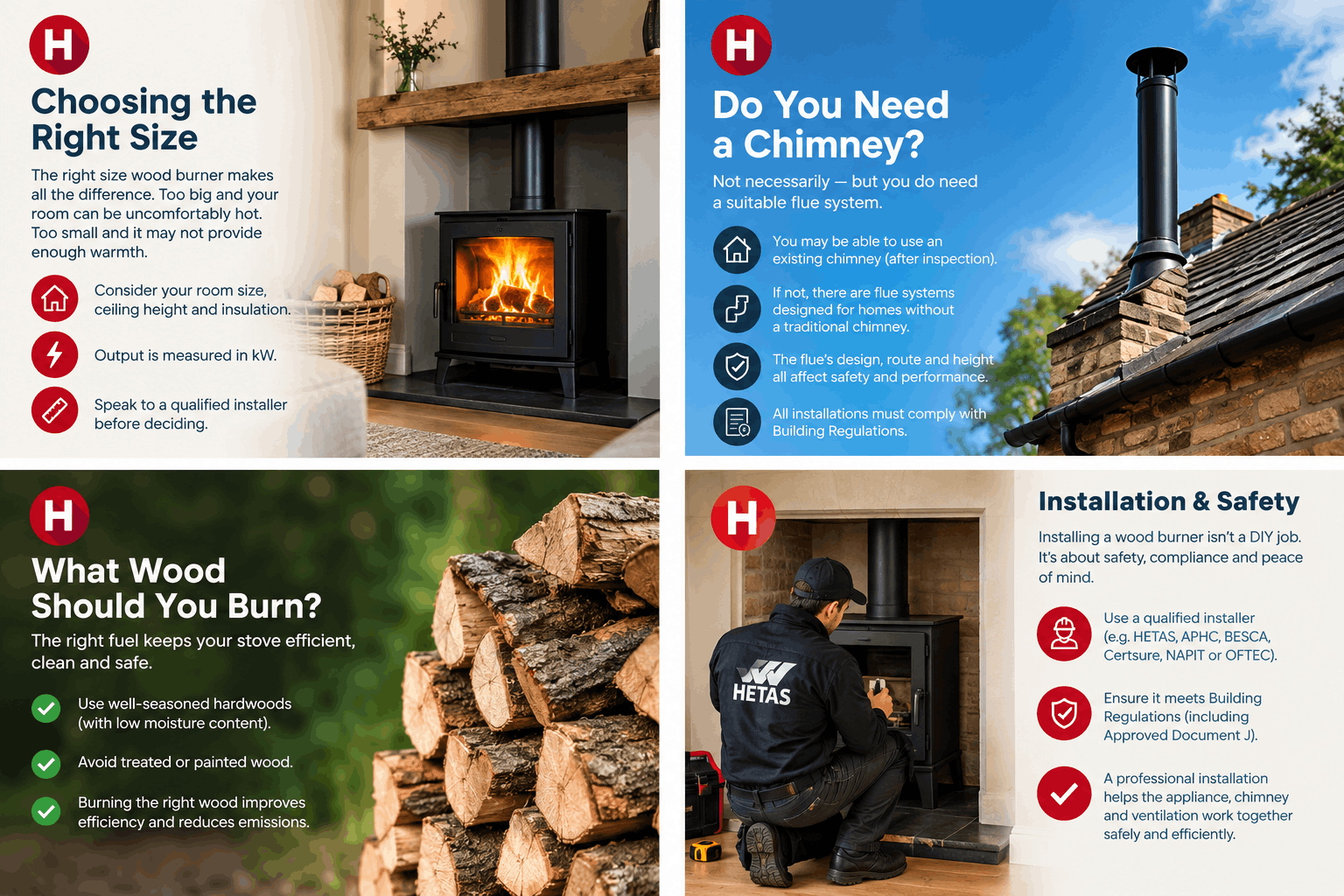
A stove that is too powerful for the room can make the space uncomfortably hot, while a stove that is too small may struggle to provide enough warmth.
The required output is normally expressed in kilowatts (kW). Room size, ceiling height, insulation, glazing, property age and other factors can all affect the appropriate output.
For example, a well-insulated modern room may require considerably less heat than a large, poorly insulated room with high ceilings.
This is why you shouldn’t choose a stove purely because it looks impressive.
Measure the room and speak to a qualified installer before deciding on the kW output.
Do I need a chimney for a log burner?
Not necessarily — but you do need a suitable flue system.
If your home already has a chimney, it may be possible to use it for your new stove after it has been properly inspected and prepared.
If your property doesn’t have a traditional chimney, there are installation systems designed for homes without an existing masonry chimney. The exact solution depends on the building and the appliance.
This is one of those areas where professional advice is important. The flue isn’t simply a pipe attached to the back of the stove. Its design, route, height and connection to the appliance all affect how safely and effectively the stove operates.
The installation also needs to comply with the relevant Building Regulations.
Can I install a wood burner myself?
Technically, homeowners may be able to undertake certain building work themselves, but installing a solid-fuel appliance isn’t something to approach casually.
There are requirements covering combustion air, flues, hearths, protection from heat and carbon monoxide safety. Approved Document J of the Building Regulations is particularly relevant to combustion appliances.
Using a competent installer is strongly recommended. Government guidance specifically advises having stoves installed by an installer registered with a competent person scheme such as HETAS, APHC, BESCA, Certsure, NAPIT or OFTEC.
A professional installation also gives you greater confidence that the appliance, chimney and ventilation system are working together correctly.
What type of wood should I burn?
This question is more important than many people realise.
Don’t burn wet wood.
Wood with high moisture content produces more smoke and can create additional deposits in the chimney. Dry wood burns more efficiently and produces more useful heat.
In England, wood sold in volumes under 2m³ must meet the requirements associated with the Ready to Burn scheme, meaning it has a moisture content of 20% or less.
You should also avoid burning:
Painted wood
Treated timber
Old furniture
Pallets
MDF
Wood containing chemicals or coatings
These materials can release harmful pollutants and may damage your stove or chimney.
If you’re collecting and drying your own logs, a moisture meter is a simple way to check whether they are ready.
Are modern wood burners more efficient than open fireplaces?
Generally, yes.
Traditional open fireplaces can look beautiful, but a large amount of heat can disappear up the chimney.
Modern wood-burning stoves are designed to control combustion much more effectively. Many current models use controlled airflow and secondary combustion systems to extract more heat from the fuel.
For example, current Kratki fireplaces and wood-burning stoves include models designed around modern efficiency and emissions requirements. Some Kratki wood-burning appliances have energy ratings such as A or A+, with reported thermal efficiencies above 80%, depending on the model.
That doesn’t mean every stove will perform identically in every home. Installation, chimney performance, fuel quality and how the stove is operated all make a difference.
What are Kratki fireplaces?
Kratki fireplaces are part of a broad range of heating appliances that includes wood-burning stoves, fireplace inserts and other fireplace solutions.
One reason people consider Kratki is the variety of designs available.
You can find traditional-looking cast-iron stoves, modern steel stoves, corner designs and larger fireplace appliances intended to become a major feature within the room.
For example, the Kratki K6 ECO is a cast-iron wood-burning stove with a 6.5kW nominal output and reported thermal efficiency of 82.9%.
Another example is the Kratki K9 ECO, an 8kW cast-iron stove with a reported thermal efficiency of 84.9%.
The important thing is not simply choosing the brand. Compare the individual model’s output, efficiency, dimensions, fuel requirements, flue connection and certification against what your home actually needs.
How much does it cost to run a log burner?
There isn’t one simple answer.
Your running cost depends on:
The price of your firewood
How dry the wood is
How often you use the stove
The stove’s efficiency
Your room size
Your home’s insulation
How much heat you need
Buying cheap but wet wood isn’t necessarily a saving. Wet wood burns less effectively because energy is used to remove moisture before the wood can burn properly. Government guidance recommends dry wood with moisture content of 20% or less.
Think about the stove as part of your overall heating system rather than simply asking, “How cheap is a log burner?”
Do wood burners need ventilation?
A stove needs an adequate supply of air for combustion.
The exact ventilation requirements depend on the appliance, its output and the property.
Modern homes can be particularly important to consider because improved insulation and airtightness can reduce natural air movement.
Don’t assume that ventilation isn’t required simply because your room feels well ventilated.
Your installer should assess the property and determine what is needed for the particular appliance.
Do I need a carbon monoxide alarm?
Yes, carbon monoxide safety should always be taken seriously when using combustion appliances.
A carbon monoxide alarm should be installed in the appropriate location and maintained according to the manufacturer’s instructions.
It is also important not to treat an alarm as a replacement for correct installation and maintenance.
Your stove, flue and chimney should all be checked and maintained properly.
How often should a chimney be swept?
Regular chimney sweeping is an important part of owning a wood burner.
Soot and tar can accumulate inside the chimney over time. This can affect performance and increase the risk of chimney fires.
UK government guidance recommends having a chimney swept at least once a year as part of proper maintenance. UK air information.
If you use the stove frequently, your installer or chimney professional may recommend a different maintenance schedule.
It is much easier to include chimney sweeping in your annual home-maintenance routine than to wait until there is a problem.
Is a log burner suitable for every home?
No.
And that’s something worth understanding before you spend money on one.
A log burner may not be the right choice if:
Your property cannot accommodate a suitable flue
The required clearances cannot be achieved
The appliance is unsuitable for the room
Your local smoke-control requirements aren’t met
You don’t have suitable fuel storage
You don’t want the ongoing maintenance
You are looking for a completely hands-off heating system
For the right home, however, a wood burner can provide both practical warmth and a strong visual focal point.
Should I choose a fireplace or a wood burner?
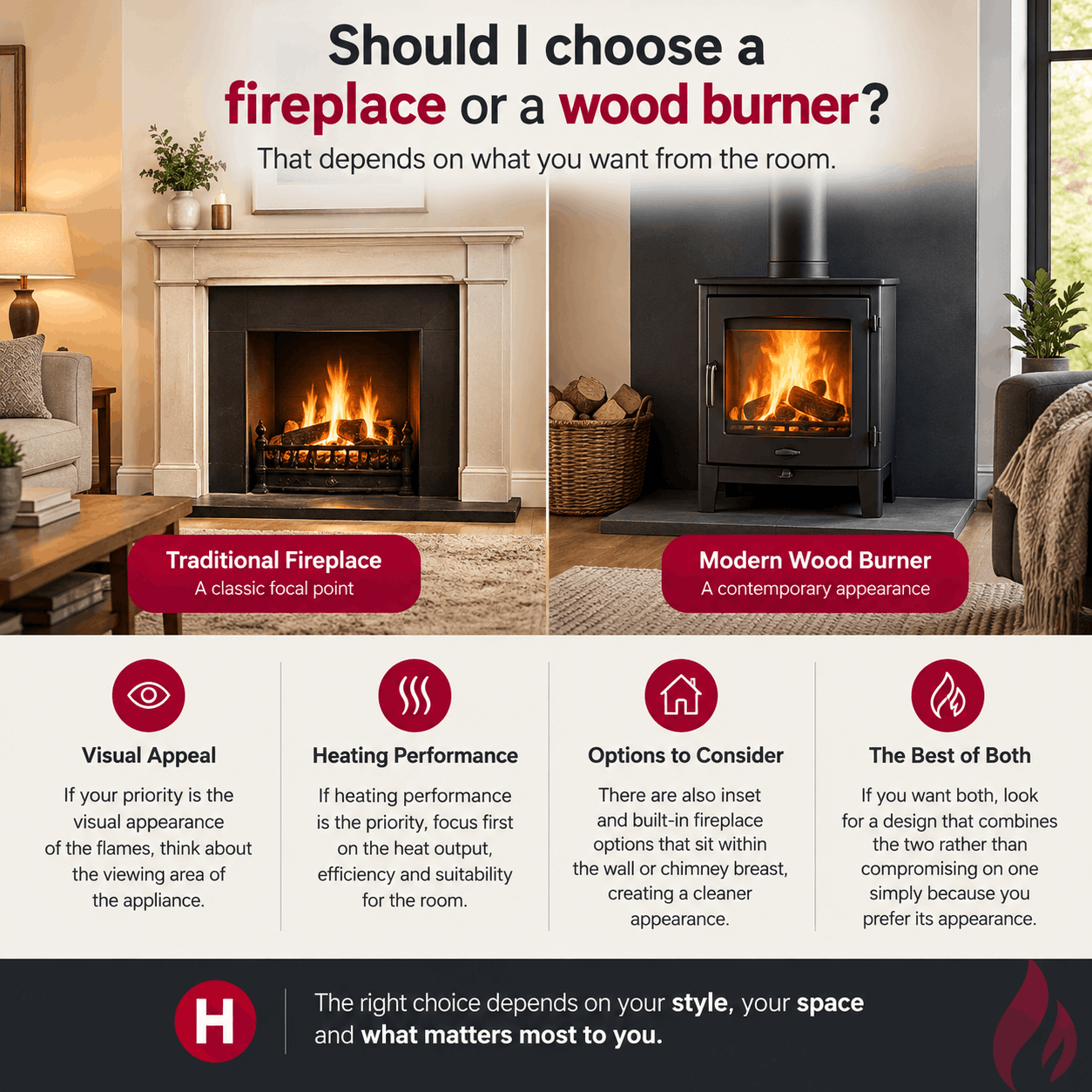
That depends on what you want from the room.
A traditional fireplace can create a classic focal point, while a modern wood burner can provide a more contemporary appearance.
There are also inset and built-in fireplace options that sit within the wall or chimney breast, creating a cleaner appearance.
If your priority is the visual appearance of the flames, think about the viewing area of the appliance.
If heating performance is the priority, focus first on the heat output, efficiency and suitability for the room.
And if you want both, look for a design that combines the two rather than compromising on one simply because you prefer its appearance.
So, what should you check before buying?
Before ordering your new log burner, fireplace or wood burner, ask yourself these questions:
1. What size is the room? This helps determine the appropriate heat output.
2. Do I have an existing chimney? If yes, have it inspected before assuming it is ready for a stove.
3. Is my property in a Smoke Control Area? Check with your local authority and make sure the appliance and fuel comply with the applicable rules. Smoke control areas
4. What fuel will I use? Plan to use properly dried, suitable wood.
5. Does the appliance meet current requirements? Check its technical information and certification rather than relying only on photographs.
6. Who will install it? Use a competent professional and make sure the installation is properly completed and certified where required.
7. How will I maintain it? Think about chimney sweeping, servicing, cleaning and fuel storage before purchasing.
Final thought
Choosing a wood burner shouldn’t start with “Which one looks nicest?”
Start with “What does my home actually need?”
Once you know the required heat output, installation requirements, chimney or flue arrangements and local regulations, choosing the right design becomes much easier.
Whether you’re comparing traditional log burners, modern wood burners, inset fireplaces or Kratki fireplaces, the best choice is the one that suits your room, your heating requirements and the way you intend to use it.
A little research before buying can save you from choosing a stove that is too large, too small or simply unsuitable for your home.
And if you’re still unsure, get professional advice before ordering. With a solid-fuel appliance, getting the fundamentals right is far more important than simply choosing the most attractive model.
Fireplaces have come a long way from the days of the conventional hearth. Modern fireplaces in the UK are popular in modern homes because they are stylish, easy to use, and efficient. If you know about the numerous types of fireplaces available, you’ll be able to make a confident choice about whether to upgrade your living area or add a statement element.
This guide looks at standalone electric fireplaces, modern fireplace designs, and fire inserts for fireplaces to help you find the best solution for your house.
Why Modern Fireplaces Are So Popular in the UK
Clean lines, simple designs, and utilitarian elegance are important in modern living spaces. A modern fireplace that UK homeowners like isn’t just for keeping warm; it also makes a space look and feel better.
Modern fireplaces give you:
Modern and sleek designs
Different ways to put things
Minimal maintenance
For many versions, a typical chimney is not needed.
Because of these benefits, modern fireplaces are great for apartments, new homes, and properties that have been remodeled.
Understanding Modern Fireplace Options
1. Electric fireplaces that stand on their own
One of the most flexible choices is a freestanding electric fireplace. You can put these fireplaces in different rooms without making any permanent changes to the building.
Main benefits:
Simple to move and place
Stylish designs that work well in modern homes
Flame effects that look real but aren’t real fire
Great for open-plan spaces, bedrooms, and living rooms
People who want a blend of looks and convenience really like freestanding electric fireplaces. They make a great focus point and fit in perfectly with modern decor.
2. Fire Inserts for Fireplaces
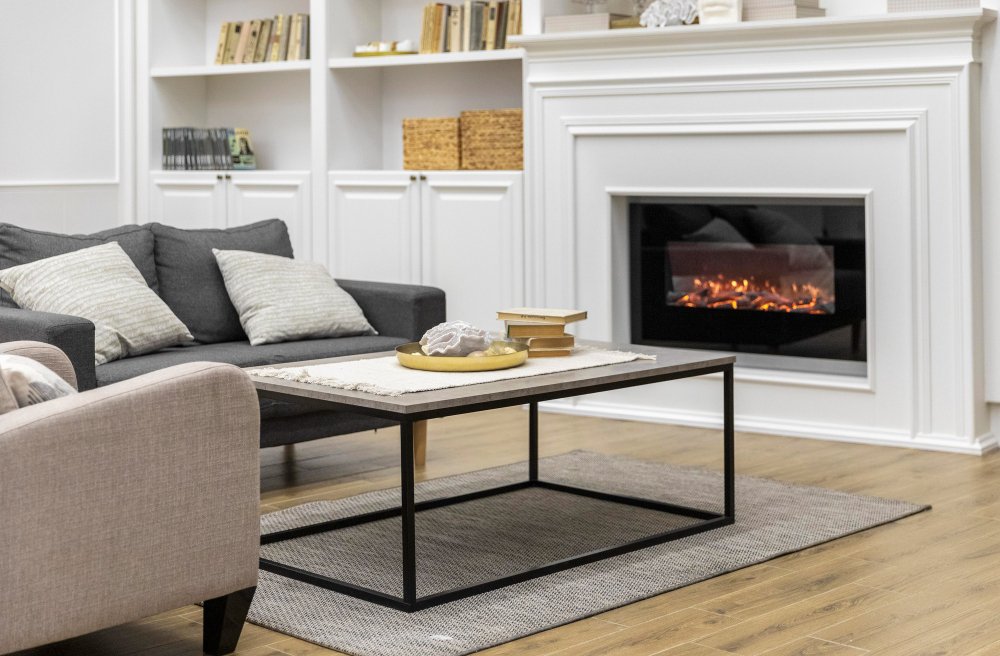
Fireplace inserts are made to fit into existing fireplace openings. They turn old or disused rooms into new highlights. They are a great option for homeowners who want to give their old fireplace a new design while retaining the built-in look.
Why use fireplace inserts?
Built-in finish that is clean
Good use of the space around the fireplace
A lot of different current styles are available.
Enhances the overall appearance of the room
Fireplace inserts are a popular choice in many UK houses since they let you update your home without changing its original style. We provide best fire inserts for fireplaces in UK.
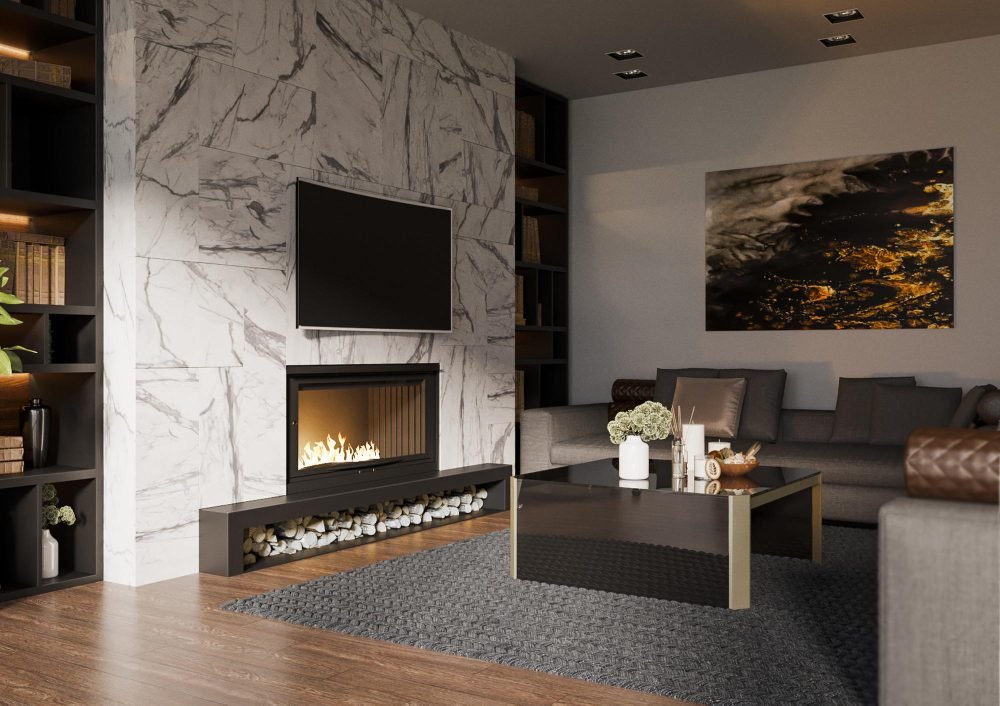
3. Modern Fireplace Designs for Contemporary Homes
Design is typically the most important thing to consumers when they look for modern fireplaces in the UK. There are several distinct forms of modern fireplaces that can fit into different kinds of homes:
Simple designs with clean lines
Looks that are built into the wall and set in
Statement pieces that stand on their own
Modern finishes including glass, steel, and matte textures
When choosing a modern fireplace, you should think about more than just how much heat it gives off. You should also think about how it will look with your furniture and the rest of your home’s decor.
How to Choose the Right Modern Fireplace
When choosing a fireplace, think about these things:
Size and shape of the room
Compact or freestanding designs work well in smaller rooms, while dramatic, modern fireplaces that act as a visual anchor work well in bigger rooms.
Preference for Style
Choose modern designs with clean lines if your home has a modern look. Electric fireplaces that stand alone perform well in flexible layouts, while inserts look good in built-in spaces.
Usefulness and Use
Think about how often you plan to use the fireplace and what is more important to you: looks or warmth. Many modern fireplaces let you change the flame settings to match your mood.
Fireplaces today are the perfect mix of style and function. They are made to fit in with modern life while making things more comfortable and pleasant.
Here are some of the main reasons homeowners select modern fireplaces:
A stylish improvement for living spaces
Not as much work as regular fireplaces
Good for many different types of homes
Makes the space feel warm and welcoming
We at Halcony Fireplaces specialize on making modern fireplaces that are stylish, reliable, and work well.We provide best modern fireplaces in the UK.
Frequently Asked Questions
Do modern fireplaces give forth enough heat?
Many modern fireplaces are made to be good extra heaters and to seem warm with realistic flame effects.
Is it safe to use an electric fireplace that stands on its own?
Yes, freestanding electric fireplaces are made with safety in mind, and many modern homes use them since they are safe and easy to clean.
Can you put fire inserts in antique fireplaces?
Many people utilize fire inserts to update outdated or underused fireplace openings, giving them a new and modern look.
Are contemporary fireplaces good for tiny rooms?
Yes, for sure. Many modern fireplace designs are modest and work well in apartments or small living areas.
Do you need a chimney for a modern fireplace?
A lot of modern fireplaces, including electric ones, don’t need a chimney, thus they may be used in a lot of different types of residences.